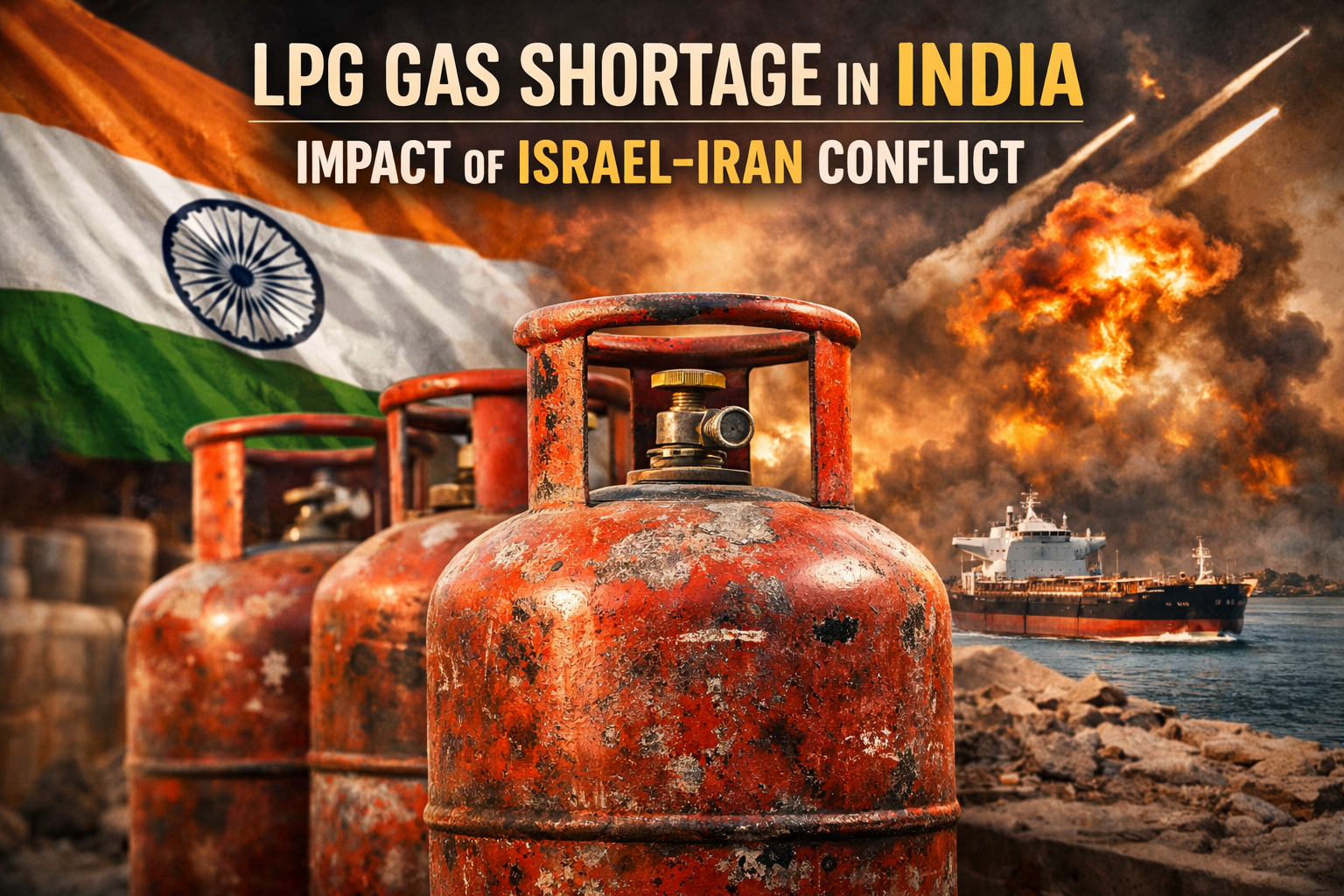
India is witnessing growing concern over the supply of Liquefied Petroleum Gas (LPG), the primary cooking fuel used by millions of households. Recent geopolitical tensions in the Middle East—particularly the ongoing conflict involving Israel and Iran—have disrupted global energy supply chains and raised fears of LPG shortages in India.
While the government has urged citizens not to panic, the crisis highlights how global conflicts can directly impact everyday life in energy-dependent countries like India.
Why Is There a Concern About LPG Shortage in India?
The main reason behind the LPG shortage concerns is the ongoing war in West Asia, which has affected key global energy routes.
A major disruption occurred around the Strait of Hormuz, one of the most important shipping lanes for oil and gas in the world. The conflict triggered military attacks and warnings that disrupted shipping traffic through the strait, which normally carries a significant portion of global energy trade.
Because many tankers transporting oil and gas avoided the region due to security risks, global energy shipments slowed down.
For India, this is critical because the country relies heavily on imported energy.
India’s Heavy Dependence on Imported LPG
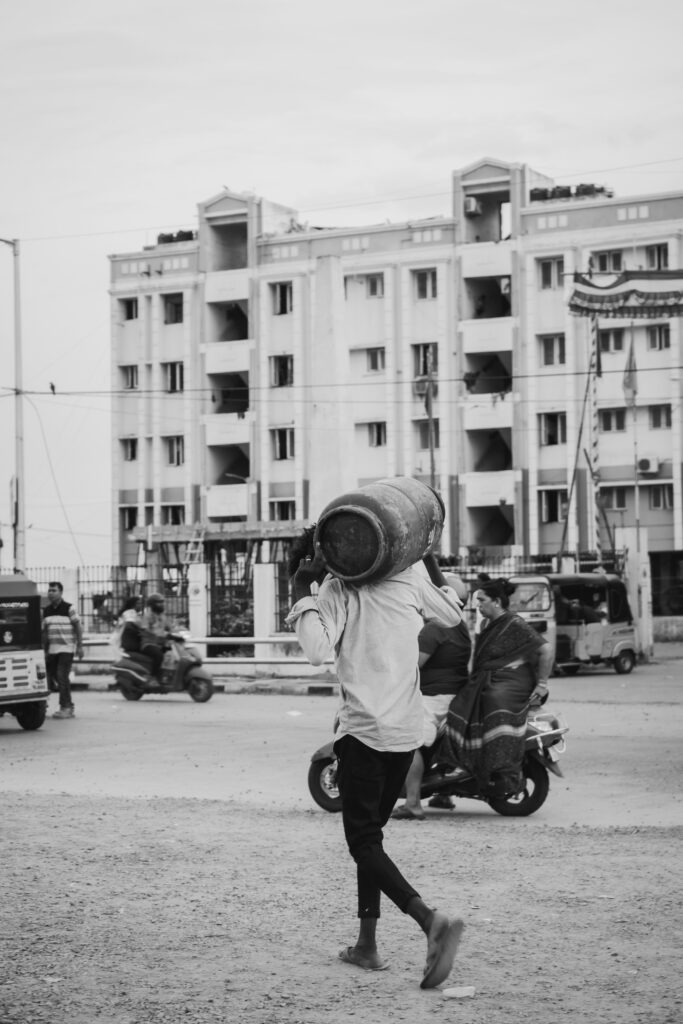
India consumes a massive amount of LPG every year, and a large portion of it comes from imports, especially from the Gulf region.
- Around 60% of India’s LPG supply is imported from overseas markets.
- A major share of these imports passes through the Strait of Hormuz, making the country vulnerable to disruptions in the Middle East.
- India also imports a large amount of natural gas and crude oil from the same region.
When shipping routes slow down or become unsafe due to war, the supply chain becomes unstable, which can lead to shortages or price increases.
Impact on Businesses and Restaurants
The LPG supply disruption is already affecting several commercial sectors across India.
Restaurants, hotels, and small food vendors rely heavily on commercial LPG cylinders for daily cooking. Because of supply disruptions, many businesses have started switching to alternative cooking methods such as:
- Electric induction cooktops
- Microwaves
- Traditional wood-fired stoves
Some industries that rely on LPG for manufacturing processes have even been forced to reduce or halt operations temporarily.
This shows that the impact of the energy crisis extends beyond households and affects the broader economy.
Government Response to the LPG Supply Crisis
The Indian government has taken several emergency measures to ensure households continue receiving cooking gas.
Authorities have:
- Prioritized LPG supply for domestic households over industrial users.
- Increased refinery production of LPG.
- Asked industries to temporarily reduce LPG consumption.
- Started sourcing fuel from alternative suppliers.
Officials have also urged citizens not to panic or hoard LPG cylinders, emphasizing that steps are being taken to stabilize supply.
Rising LPG Prices: Another Major Concern
Besides supply shortages, LPG prices have also increased due to the global energy crisis.
When wars disrupt oil and gas shipments, the international price of fuel rises. This eventually affects retail LPG prices in countries like India that depend on imports.
Higher LPG prices could increase household expenses and also raise costs for restaurants, small businesses, and food vendors.
Risk of Black Marketing
Whenever shortages occur, there is also a risk of illegal activities such as black marketing.
Reports from some regions have revealed illegal refilling operations and cylinders being sold at prices far above the official rate, highlighting the need for stricter monitoring of LPG distribution networks.
Authorities have warned that strict action will be taken against anyone involved in such activities.
Could the LPG Crisis Get Worse?
The future of LPG supply in India largely depends on how the geopolitical situation develops in the Middle East.
If the conflict continues and shipping routes remain disrupted, India could face:
- Higher LPG prices
- Limited availability of commercial cylinders
- Increased pressure on energy imports
- Economic ripple effects across industries
However, if the conflict stabilizes and shipping routes reopen fully, the supply chain may recover quickly.
What Consumers Should Do
Experts recommend that consumers take simple precautions:
- Avoid panic buying or hoarding LPG cylinders
- Use cooking gas efficiently
- Explore alternative cooking options like induction stoves if possible
These steps can help reduce pressure on the supply system during uncertain times.
Conclusion
The potential LPG shortage in India is a reminder of how deeply interconnected global energy markets are. A conflict thousands of kilometers away in the Middle East can quickly influence fuel prices, cooking gas supply, and everyday life in India.
Although the government is taking steps to secure supplies and stabilize the market, the situation remains closely tied to developments in the Israel–Iran conflict.
For now, authorities advise calm and responsible consumption while monitoring the evolving geopolitical situation.
FAQs
1. Is there currently an LPG shortage in India?
There are concerns about supply disruptions due to the West Asia conflict, but the government says it is prioritizing household supply.
2. Why does the Israel–Iran war affect LPG in India?
Because much of India’s LPG imports pass through the Strait of Hormuz, a key energy shipping route affected by the conflict.
3. Will LPG prices increase in India?
Prices may rise if global energy supply remains disrupted for a long period.
4. Should people stock up on LPG cylinders?
Authorities have advised against panic buying or hoarding.