
What is a SIP? (Start Here)
A Systematic Investment Plan (SIP) lets you invest a fixed amount — as low as ₹500 a month — into a mutual fund automatically. Think of it like an EMI, but instead of paying a bank, you’re paying yourself by building wealth.
The best part? You don’t need to time the market or watch stocks every day. Just invest consistently every month and let your money grow over time.
Step 1: Understand Your “Why” First
Before you pick any fund, ask yourself one simple question: What am I saving for?
Your goal decides everything — which fund to choose, how long to stay invested, and how much risk you can handle.
Long-term goals (7+ years away): Retirement, buying a house, child’s education. You have time on your side, so you can take more risk for higher returns.
Medium-term goals (3–7 years away): A wedding, a car, or a vacation fund. Moderate risk works here.
Short-term goals (1–3 years away): An emergency fund or something you’ll need soon. Safety matters more than returns here.
Simple rule: The longer your goal, the more risk you can afford to take — and the more reward you stand to gain.

Step 2: Know Your Risk Appetite
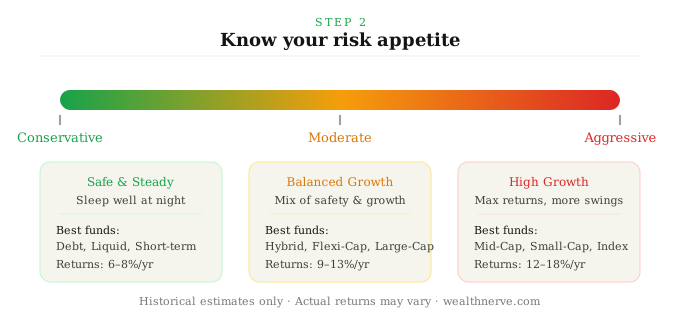
Risk appetite simply means: How okay are you if your investment goes down temporarily?
Be honest with yourself, because putting money in a high-risk fund and panicking when it falls is the number one way people lose money in mutual funds.
Ask yourself this: “If my ₹10,000 investment temporarily became ₹7,000, would I lose sleep?”
- If yes — start with low-risk funds. Safety first.
- If no — you can go for higher-risk funds with the potential for better returns.
- If you’re somewhere in the middle — balanced or hybrid funds are made for you.
Step 3: Learn the Main Types of Mutual Funds
There are hundreds of mutual funds out there, but they all fall into a few simple categories. Here’s what you actually need to know:
Large-Cap Equity Funds Invest in India’s biggest, most stable companies (like Reliance, TCS, HDFC). Medium risk. Good for 5+ year goals. Expected returns: 10–13% per year.
Mid-Cap Equity Funds Invest in medium-sized companies with higher growth potential. Higher risk. Good for 7+ year goals. Expected returns: 12–16% per year.
Small-Cap Equity Funds Invest in smaller companies that can grow a lot — but can also fall hard. Very high risk. Only for 10+ year goals. Expected returns: 14–18% per year.
Flexi-Cap / Multi-Cap Funds The fund manager freely picks from large, mid, and small companies based on opportunity. Medium-high risk. Great for first-time investors. Expected returns: 11–15% per year.
Hybrid / Balanced Funds A mix of stocks and bonds. Moderate risk with more stability. Good for 3–5 year goals. Expected returns: 9–12% per year.
Debt / Bond Funds Invest in government bonds and fixed-income securities. Low risk, stable returns. Best for short-term goals of 1–3 years. Expected returns: 6–8% per year.
Index Funds (Nifty 50 / Sensex) Simply copy a market index like Nifty 50. Low cost, no active management needed. Medium risk. Great for 5+ years. Expected returns: 10–13% per year.
Note: All return figures are historical estimates. Past performance does not guarantee future results.
Best pick for most beginners: A Nifty 50 Index Fund or a Flexi-Cap Fund. They’re simple, diversified, low-cost, and have a strong long-term track record. Start here, then diversify later as you learn more.
Step 4: Check These 5 Things Before Choosing a Fund
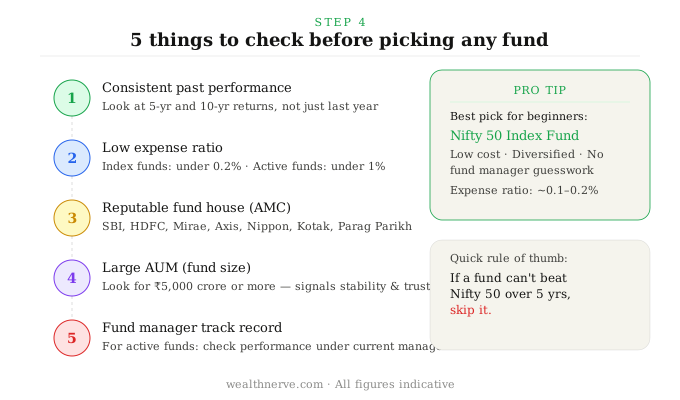
Once you know which type of fund suits you, here’s how to compare specific funds and pick the best one:
1. Consistent Past Performance Look at 5-year and 10-year returns — not just the last 1 year. A fund that consistently beats its benchmark over many years is a reliable sign of quality.
2. Expense Ratio (Lower is Better) This is the annual fee the fund charges you. Even a 0.5% difference matters a lot over 10–20 years. For index funds, look for under 0.2%. For actively managed funds, under 1% is considered good.
3. Fund House (AMC) Reputation Stick to well-known, SEBI-registered fund houses. Some trusted names include SBI Mutual Fund, HDFC, Mirae Asset, Axis, Nippon India, Kotak, and Parag Parikh. Avoid unknown or very new AMCs.
4. Fund Size (AUM) AUM stands for Assets Under Management — basically how much money the fund manages. A larger AUM (₹5,000 crore or more) generally means the fund is more stable and trusted by many investors.
5. Fund Manager Track Record For actively managed funds, check how long the current fund manager has been running it, and whether performance has been consistent during their tenure.
Step 5: Match the Fund to Your Timeline
This is the simplest and most important rule of all:
- Less than 1 year: Liquid Funds or Overnight Funds only. Never put this money in equity — you could lose it.
- 1–3 years: Short Duration Debt Funds or Conservative Hybrid Funds.
- 3–7 years: Balanced Advantage Funds or Hybrid Funds — a mix of equity and debt.
- 7+ years: Equity Funds (Large-Cap, Flexi-Cap, or Index Funds). Time is your biggest advantage — let it work for you.
Step 6: Start Small, Then Grow
You do not need a large amount to start. Here’s a simple approach that works for most beginners:
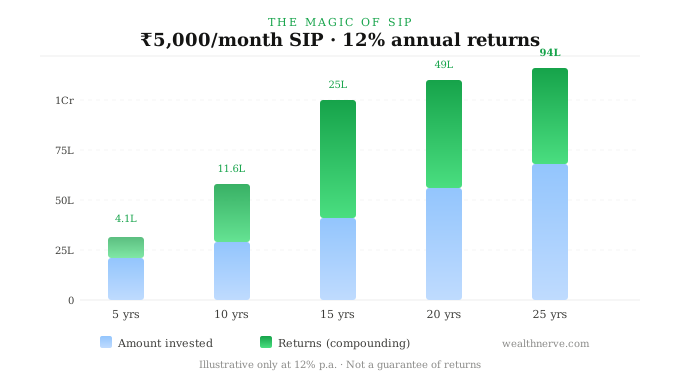
Start with ₹500–₹2,000 per month. Increase your SIP amount every year as your income grows. This is called a “Step-Up SIP” and it makes a massive difference over time.
Begin with 1 or 2 funds maximum. More funds do not mean better results. Keeping it simple helps you stay consistent, which matters far more than complexity.
Automate your SIP. Set it up so the money moves on the 1st or 5th of every month — before you have a chance to spend it. Out of sight, out of mind.
Never stop during market dips. When the market falls, your SIP is actually buying more units at a cheaper price. That’s a good thing. Stopping is the worst mistake you can make.
Common Mistakes to Avoid
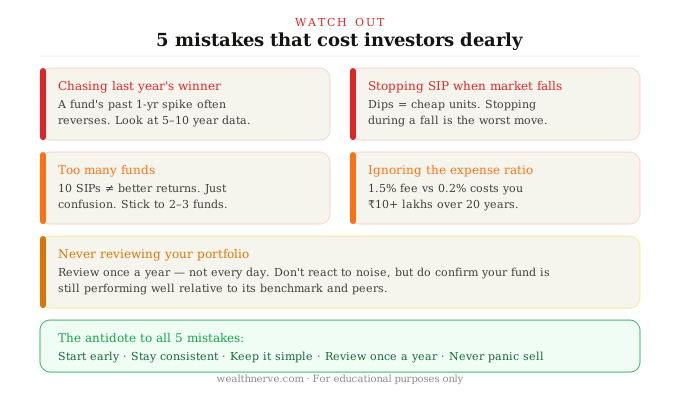
Chasing last year’s top performer. A fund that returned 40% last year often comes back down the next year. Look for consistent long-term performance, not recent hype.
Stopping your SIP when the market falls. This is the worst time to stop. You lose the advantage of buying cheap units. Stay invested and trust the process.
Investing in too many funds. Having 10 different SIPs doesn’t mean better diversification — it just creates confusion. Two to three well-chosen funds are more than enough.
Ignoring the expense ratio. A difference of 1.5% vs 0.2% in fees seems small but can cost you lakhs over 20 years. Always check before investing.
Not reviewing your portfolio. Check your investments once a year — not every month. Don’t react to short-term noise, but do confirm annually that your fund is still performing well.
The WealthNerve Quick-Start Formula
If you’re 20–35 years old with a 10+ year horizon: Pick a Nifty 50 Index Fund and one Flexi-Cap Fund. That’s it.
If you’re 35–50 years old with a 5–10 year horizon: Pick one Large-Cap Fund and one Hybrid Fund for balance.
If you’re 50 or above: Shift focus toward Debt Funds and Hybrid Funds for stability and capital protection.
Then: automate, stay consistent, and review once a year. That’s the whole strategy.
Final Word
Choosing the right SIP fund isn’t about finding the “perfect” fund — it’s about finding the right fund for you, based on your goal, your timeline, and your comfort with risk. Start simple, stay consistent, and let the power of compounding do the work over time.
The best SIP is the one you actually start.
Disclaimer: This article is for educational purposes only and does not constitute financial advice. Mutual fund investments are subject to market risks. Please read all scheme-related documents carefully and consult a SEBI-registered financial advisor before investing.